
Introduction
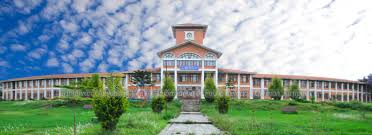
Nestled in Kirtipur — an ancient hilltop town just five kilometres from the heart of Kathmandu — Tribhuvan University (TU) stands not only as Nepal’s oldest and largest university, but as one of the largest universities in the entire world by student enrollment. Established on June 25, 1959, TU was the first national institution of higher education in Nepal and remains, to this day, the cornerstone of the country’s academic life.
With over 460,000 enrolled students, 62 constituent campuses, more than 1,062 affiliated colleges spread across all seven provinces of Nepal, and a staggering 4,400+ courses on offer, Tribhuvan University is in a class of its own. It holds a Guinness World Record for the most graduates at a single graduation ceremony, and its reach extends to the most remote corners of the Himalayan nation — making higher education accessible to millions who might otherwise never have had the chance.
Quick Facts at a Glance
- Official Name: Tribhuvan University (TU) — त्रिभुवन विश्वविद्यालय
- Type: Public, Autonomous, Non-Profit University (Central University)
- Established: June 25, 1959
- Location: Kirtipur, Bagmati Province, Kathmandu, Nepal
- Campus Size: 382.44 acres (154.77 hectares) — main campus
- Chancellor: Prime Minister of Nepal
- Pro-Chancellor: Minister of Education, Nepal
- Academic Staff: 16,062 (7,838 teaching + 8,224 administrative & support)
- Total Students: 460,632+
- Constituent Campuses: 62
- Affiliated Colleges: 1,062+
- Central Departments: 40
- Research Centres: 4
- Total Courses Offered: 4,400+
- Annual Budget: Rs. 26.169 billion (~USD $175 million) (2025–26)
- World Ranking: Top 1201–1500 (Times Higher Education, 2024)
- Asia Ranking: Top 251–300
- Official Website: www.tu.edu.np
History & Background
The story of Tribhuvan University begins with the vision of King Tribhuvan Bir Bikram Shah — a forward-thinking monarch who believed that education was the foundation of a prosperous, independent nation. The university was named in his honour and established under the Tribhuvan University Act on June 25, 1959, with its Central Administrative Office and main campus located on the northeastern slopes of Kirtipur.
In its early years, TU operated out of Tripureshwor Campus in Kathmandu, gradually expanding its faculties and programs. By the 1960s, it had introduced Master’s level courses in Humanities, Social Sciences, Education, and Sciences. Sanskrit postgraduate studies followed in 1970. Through the 1970s, TU expanded its affiliation model — beginning affiliations with private colleges in 1979 to meet rapidly growing national demand, transforming from a centralised institution into a nationwide academic network.
A landmark moment came on January 8, 2013, when the Government of Nepal officially declared Tribhuvan University a Central University — a recognition of its unparalleled role in national education and development.
After Nepal’s second democratic movement in 2006, the Prime Minister became the ceremonial Chancellor of the university, with the Minister of Education serving as Pro-Chancellor. The Vice-Chancellor is the Chief Executive, supported by the Rector for academic affairs and the Registrar for financial management and administration.
“To produce capable human resources for the overall development of the country by imparting quality higher education — serving the nation through research, innovation, and accessible education for all.” — Mission of Tribhuvan University
Academic Structure: Institutes & Faculties
Tribhuvan University operates through a dual academic structure — five professional institutes for technical and scientific disciplines, and four general faculties for broader liberal arts and professional education. Together, they run 40 central departments and thousands of programs nationwide.
THE FIVE INSTITUTES
1. Institute of Engineering (IoE) One of the most prestigious engineering institutions in Nepal, IoE is home to the famous Pulchowk Campus — known across the country for its highly competitive entrance examination. IoE offers programs in Civil, Mechanical, Electrical, Electronics, Computer, and Architecture engineering, among others. Admission to Pulchowk Campus is widely considered among the most competitive in Nepal.
2. Institute of Medicine (IoM) Manages the TU Teaching Hospital and offers MBBS, BDS, nursing, public health, and various allied health programs. IoM is one of Nepal’s primary producers of medical professionals and has a long-standing record of training doctors who serve both Nepal and abroad.
3. Institute of Science and Technology (IoST) Offers BSc, MSc, and research programs across Physics, Chemistry, Mathematics, Statistics, Microbiology, Botany, Zoology, Computer Science, and more. It is the largest science institute in Nepal.
4. Institute of Forestry (IoF) Dedicated to forestry, environmental management, and natural resource programs. IoF trains professionals for Nepal’s critical forest conservation, land management, and environmental protection needs.
5. Institute of Agriculture and Animal Sciences (IAAS) Focuses on agriculture, animal husbandry, veterinary sciences, and food technology — producing graduates who contribute directly to Nepal’s agricultural development and food security goals.
THE FOUR FACULTIES
1. Faculty of Humanities and Social Sciences (FoHSS) One of the largest faculties in Nepal by student enrollment, established alongside the university in 1959. It covers history, literature, journalism, sociology, anthropology, geography, political science, economics, and more.
2. Faculty of Management (FoM) Offers BBS, BBA, MBA, MBS, and public administration programs through Shanker Dev Campus and hundreds of affiliated colleges. It is the primary pathway for business and management education across Nepal.
3. Faculty of Education (FoE) Trains teachers, curriculum designers, and educational administrators at Bachelor’s and Master’s levels. It plays a foundational role in shaping the quality of education delivered throughout Nepal’s schools.
4. Faculty of Law (FoL) One of TU’s oldest faculties, with roots going back to 1954 when a Law College was established with affiliation from Patna University, India. The faculty was formally established within TU in 1959 and renamed the Faculty of Law in 1974. It offers programs in national law, international law, and criminal justice.
Campus Life & Environment
TU’s main campus in Kirtipur spreads across nearly 383 acres on a historic hilltop overlooking the Kathmandu Valley. The campus houses central departments, administrative offices, libraries, research centres, sports facilities, and student hostels — all within a compact and walkable academic township.
Beyond Kirtipur, TU’s 62 constituent campuses are spread across all seven provinces of Nepal — from Terai plains to mountain districts — making it the most geographically distributed university in the country. Notable constituent campuses include Tri-Chandra Multiple Campus, Amrit Science Campus (ASCOL), and Patan Multiple Campus, among dozens of others.
Every constituent and affiliated college under TU must meet infrastructure and faculty qualification standards defined by the university, with regular audits to ensure compliance. This quality assurance framework underpins TU’s national credibility despite its vast scale.
Research Centres
Tribhuvan University maintains four dedicated research centres, each headed by an Executive Director and focused on addressing Nepal’s specific development and knowledge needs:
1. Centre for Economic Development and Administration (CEDA) Conducts policy research and economic analysis to support national development planning and public administration reform.
2. Centre for Nepal and Asian Studies (CNAS) Focuses on historical, cultural, and social research related to Nepal and the broader Asian region, preserving and advancing Nepal’s intellectual heritage.
3. Research Centre for Applied Science and Technology (RECAST) Bridges academic science and practical technology, supporting research that connects laboratory discoveries to real-world applications in Nepal’s development context.
4. Research Centre for Educational Innovation and Development (CERID) Dedicated to improving Nepal’s education system through research into curriculum, pedagogy, teacher training, and educational policy.
Scale, Rankings & Records
The sheer scale of Tribhuvan University sets it apart not just in Nepal, but globally:
- One of the 12 largest universities in the world by student enrollment
- Guinness World Record holder — most graduates at a single graduation ceremony (49th Convocation, December 2023, with over 73,000 graduates)
- Times Higher Education World Ranking: Top 1201–1500 globally (2024)
- Asia University Ranking: Top 251–300
- 4icu University Ranking: 2nd in Nepal, 6,676th worldwide
- 4,400+ courses across certificate, undergraduate, and postgraduate levels
- 115 technical certificate courses, 1,079 Bachelor’s programs, and 1,000 Master’s programs
Vision 2030
Tribhuvan University has outlined a comprehensive Vision 2030 — a strategic reform agenda designed to modernise the university, improve academic quality, and raise its global standing. Key pillars of Vision 2030 include:
- Quality Improvement: Raising standards across all constituent and affiliated institutions through curriculum reform, faculty development, and regular academic audits
- Market-Relevant Programs: Aligning academic programs with Nepal’s evolving job market and economic priorities
- Research Enhancement: Expanding the output and impact of TU’s four research centres and encouraging faculty-led applied research
- Restructuring: Transitioning toward a model of greater autonomy for schools and constituent campuses while maintaining central quality control
- Global Ranking: Implementing strategies to improve TU’s position in international university rankings by 2030
- Equity & Access: Continuing to expand access to higher education in rural, remote, and underserved regions of Nepal
Notable Affiliated Colleges
TU’s network of over 1,062 affiliated colleges includes some of Nepal’s most respected academic institutions:
- Shanker Dev Campus — Premier institution for business and management studies
- Amrit Science Campus (ASCOL) — One of the top science colleges in Nepal
- Tri-Chandra Multiple Campus — Historic campus offering science, arts, and humanities
- Patan Multiple Campus — Offers diverse programs in humanities, science, and commerce
- Pulchowk Engineering Campus (IoE) — Nepal’s most competitive engineering school
Why Choose Tribhuvan University?
- Nepal’s oldest (1959) and largest university — a name trusted by generations
- Guinness World Record holder for largest graduation ceremony
- 4,400+ courses across every major discipline
- Physically present in all 7 provinces of Nepal — accessible to students nationwide
- Constituent campuses offer affordable, quality education compared to private institutions
- Four dedicated research centres addressing Nepal’s real development needs
- Pathway to Nepal’s most competitive professional programs in engineering, medicine, and law
- Internationally recognised — ranked among the top 300 universities in Asia
For admissions, programs, affiliated college lists, and campus information, visit the official website at www.tu.edu.np